 Strategy
Saltmarch Compact keeps its arithmetic in the open
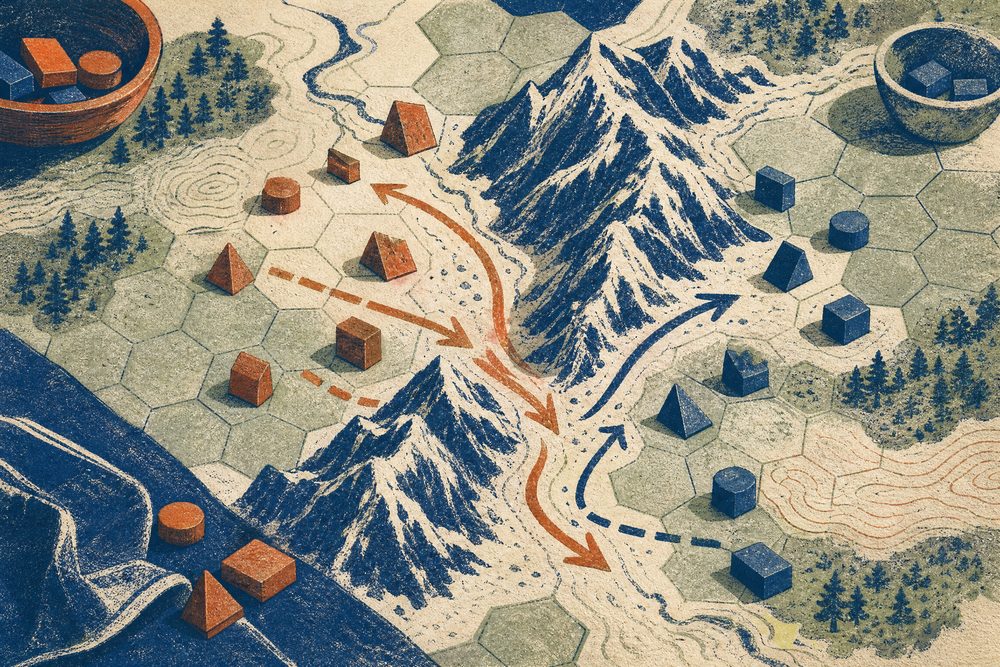
The central pleasure of this campaign game is that it will not lie to you. Before you commit to any engagement it shows the full range of outcomes as a range, not a percentage, and it holds to whatever it rolls. Eighty-one hours in, we have lost provinces we expected to lose and won a siege we had written off, and in neither case did it feel arbitrary. The economic layer underneath is where the real game lives: grain moves slowly, roads silt up, and a winter campaign costs you two summers of recovery.
Where it falls down is in explaining itself. The tutorial walks through the interface competently and never once mentions that food spoils in transit, which is the single most important rule in the game. The diplomacy screen is worse — breaking one treaty takes three nested menus and a confirmation you can easily miss. We are recommending it anyway, with the caveat that your first ten hours will feel like reading a manual you were not given.
Keep it
81 h wall-clock
Desktop · handheld
Long campaign completed
Written by H. Oyelaran
 Horror
The Pumphouse Year is quieter than its trailers promised
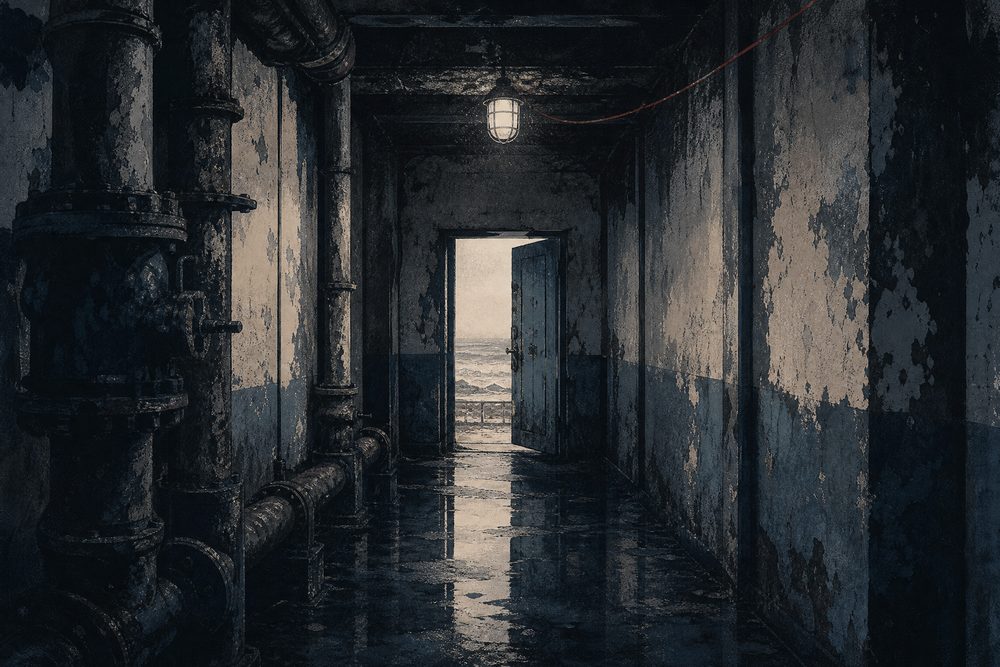
For six of its nine hours this is one of the most disciplined horror games we have played. There is no pursuer. You are repairing machinery in a coastal pumping station that is slowly filling with water, and the rising level is the only clock the game gives you. Dread accumulates from the arithmetic of it — this valve or that one, and no time for both. The sound design deserves particular credit for how much it achieves with almost nothing.
Then the final chapter introduces something that chases you, and the collapse is immediate. Two of us think the ending is a failure of nerve that retroactively cheapens the restraint. The other two think it is a legitimate release of tension that most players will want. We could not resolve this and have printed both positions rather than averaging them into a verdict neither side holds.
Split desk
9 h wall-clock
Console · desktop
Finished twice, two writers
Written by M. Doherty & F. Ashworth
 Simulation
Three Wells asks you to accept a bad harvest
There is no reset here and no seasonal insurance. Plant badly in spring and you will eat badly in winter, and the game will not offer you a way around that. What makes it bearable rather than punishing is that it never hurries you: a session ends when you decide it ends, and the valley will be exactly as you left it. We declared fifty hours in advance, as we do for games without an ending, and the writer went to seventy-four before we could prise her away.
The accessibility work is the best in this cycle. Every action can be completed with a single input, the day length can be extended without changing the economy, and the text scales to a genuinely usable size. If you have been waiting for a farming simulation that respects both your time and your hands, this is it.
Keep it
74 h wall-clock
Laptop · handheld
Declared 50 h, ran over
Written by F. Ashworth
 Platform
Lampmoor Drift is not finished, and we are not pretending otherwise
The momentum system is the best thing we have felt in a platform game in three years. Speed is stored rather than granted, so a clean run through a chamber pays for the next one, and learning it is a genuine pleasure. We want to write a long piece about this game. We cannot yet.
On two of our four machines the game dropped inputs during wall transitions, consistently and reproducibly. One save file corrupted at eleven hours and could not be recovered. We have sent our logs and hardware details to the two-person studio, kept this write-up deliberately short, and put a date in the diary to look again in the autumn. Our third verdict exists for exactly this situation: the design is promising, the build is not ready, and pretending otherwise would not help anyone.
Look again later
11 h wall-clock
Desktop · laptop · handheld
Crash logs sent to studio
Written by H. Oyelaran
Strategy
Harrowgate Ledger revisited: we were too generous a year ago
When this railway-building game launched we called it the most elegant thing in its genre and put it near the top of the year. Twelve months and two updates later, we have gone back and we were wrong — not about the elegance, but about how long it lasts. The opening thirty hours are still superb. Beyond that the map generator repeats itself badly enough that the fourth campaign is recognisably the second one with different names.
The original piece stays online with a correction note at the top, as everything here does. We have moved the durability band down by eighteen points and left the craft band where it was. This is the sort of thing that only becomes visible with time, which is the argument for revisiting games rather than filing them and moving on.
Split desk
118 h wall-clock, cumulative
Desktop
Revisit, band corrected
Written by N. Kaur
Horror
Tidemark Halt is a good short story stretched to novel length
Three hours in, this is excellent: a single stranded railway platform, a timetable that makes no sense, and a slow suggestion that you have been waiting far longer than you think. The writing is careful and the restraint is real. If it ended there we would be recommending it without qualification.
It runs to eleven hours. The middle section repeats the same revelation four times with different set dressing, and by the third repetition the effect has entirely gone. We finished it because we finish everything, and we would suggest most readers stop somewhere around the fourth chapter and keep the better game they will have in their memory.
Split desk
11 h wall-clock
Laptop · console
Completed
Written by M. Doherty
Simulation
Coppice Rule is a spreadsheet that learned to be beautiful
A woodland management simulation covering forty in-game years, in which almost every decision pays off long after you have forgotten making it. Thin a stand badly in year four and year nineteen will tell you about it. We declared sixty hours and used fifty-eight, which is the closest any of us has come to an accurate estimate all year.
Two warnings. The interface assumes you can read small numbers at a glance and offers no scaling, which rules it out for several readers who have written to us. And the game genuinely does not explain its own thinning mechanic — we worked it out from a community diagram, which is not a substitute for documentation. Recommended, with those caveats stated plainly rather than buried.
Keep it
58 h wall-clock
Desktop · laptop
Declared 60 h, came in under
Written by N. Kaur
 Qemoravin