Qemoravin mark Qemoravin
Sections
Front Write-ups Scoring The desk Write to us Privacy Policy Cookie Policy
Independent · Sheffield · since 2019

Sixty hours in, then we start writing.

Qemoravin is four people, one shared table and a rule we have never broken: nobody publishes a verdict on a game they have not finished. What you get instead of a launch-day score is a considered piece written after the credits, with our workings printed alongside it.

96Write-ups on file
61 hMedian time before publishing
0Sponsored placements, ever
The arrangement

Three commitments that shape everything else here

None of these are unusual in principle. They are unusual in that we hold to them when a release calendar makes it inconvenient.

01

Finish first, opinion second

A write-up appears only once at least one of us has reached the end. Where a game has no end — a simulation, a builder — we set a stated hour count in advance and print it with the piece.

02

Show the workings

Every write-up carries four measured bands rather than a single number. You can disagree with our weighting because you can see it, which is the entire point of printing it.

03

Corrections stay above the text

When we get something wrong we say so at the top of the piece and leave the original paragraph underneath. Quietly editing a mistake away is the one thing we consider unforgivable.

Current cycle

Four pieces finished this month

Hours are wall-clock, taken from a stopwatch rather than a launcher. Hardware lists every machine the writer actually used.
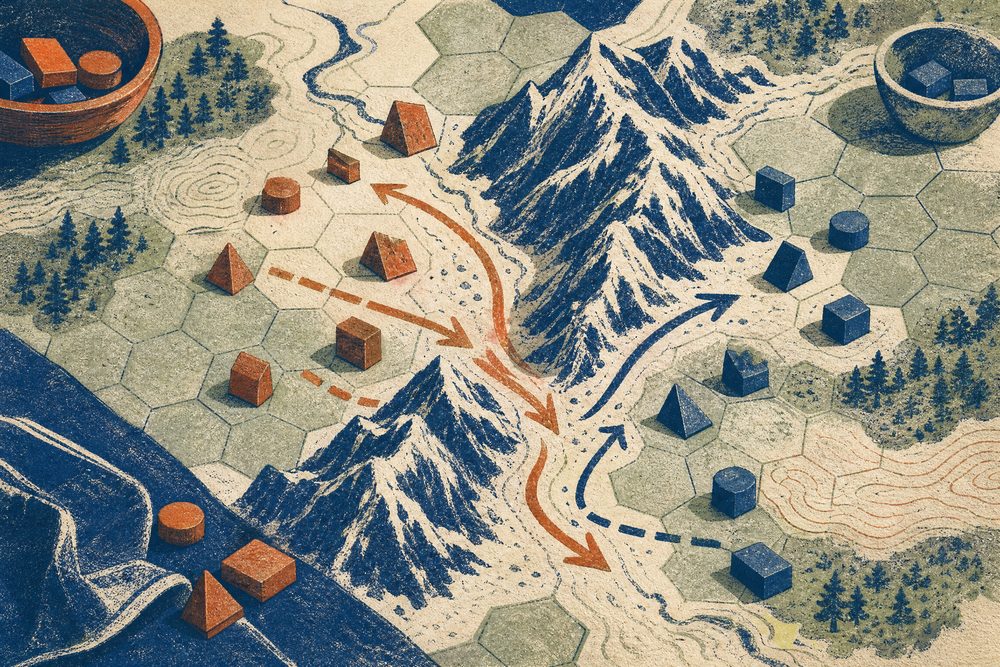
Illustrated hex-tile war table with supply arrows across a mountain pass

Saltmarch Compact keeps its arithmetic in the open

A turn-based campaign game that refuses to hide its dice. Every projected outcome is shown as a range before you commit, and the result is a strategy layer where losing feels like a decision rather than a betrayal. The diplomacy screen is genuinely poor — three nested menus to break one treaty — and the tutorial explains the interface without ever explaining the economy. We still spent eighty-one hours with it and expect to spend more.

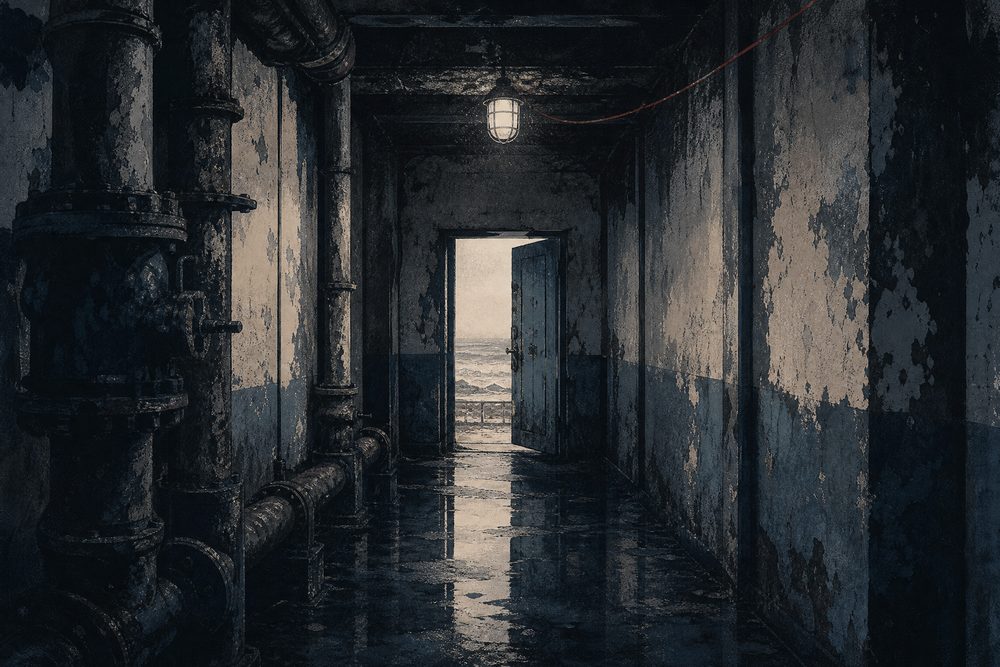
Illustrated flooded corridor in an abandoned coastal pumping station

The Pumphouse Year is quieter than its trailers promised

Almost nothing chases you. The dread is structural: you are repairing machinery in a building that is slowly filling, and the water level is the clock. For six of its nine hours that restraint is remarkable. Then the final chapter introduces a pursuer and the game becomes ordinary in about four minutes. We argued about this on the desk for a week and settled on a split verdict rather than pretending we agreed.

Illustrated aerial view of a small farming valley with a stone bridge

Three Wells asks you to accept a bad harvest

A farming simulation with no reset and no seasonal insurance. If you plant badly in spring you eat badly in winter, and the game will not soften that for you. It is the most quietly demanding thing we have played this year, and also the most generous with time — sessions end when you decide they do. Our declared hour count was fifty; the writer went to seventy-four and had to be prised away from it.

Illustrated floating stone platforms linked by rope bridges above cloud

Lampmoor Drift is not finished, and we are not pretending otherwise

The momentum system here is the best thing we have felt in a platform game in three years — genuinely novel, genuinely worth learning. It also dropped inputs on two of our four machines during wall transitions, and one save file corrupted after eleven hours. We have sent the logs to the two developers, kept the write-up short, and put a date in the diary to look again. This is the only piece in the current cycle carrying our third verdict.

Four bands, no total

We never add the numbers up

A single score forces incompatible things into one figure. Instead we publish four bands and leave the weighting to you, because a reader who cannot hold a controller for two hours needs a different summary than one who can.

These are the averages across the current cycle, not a verdict on any one game.

Read the method
Craft & construction78
Holds up over time71
Reachable to play62
Runs as promised55

The bottom two bands have been our lowest for four cycles running. That is a statement about the current release calendar rather than about the games we happened to choose.

From the postbag

What readers actually write to us about

Reproduced with permission, lightly trimmed for length. We answer every message that asks a question.

I have limited use of my right hand and your reachable band is the only thing I trust. Please keep printing which remaps you tested rather than which ones the menu claims to offer.

Ruth C · Leeds

You gave a split verdict on a game I loved and explained exactly why the two of you disagreed. I would rather read that than a number I have to reverse-engineer.

Owen M · Cardiff

Thank you for going back to a game a year later and saying you had been too generous. I have not seen another desk do that in public.

Priya R · Manchester
The digest

One email when a piece is finished, and nothing else

No round-ups, no release calendars, no partner messages. You get the write-up, the four bands, and a line about what changed since the last time we wrote about that studio. Choose how often it lands.

We store your address and your cadence choice, nothing more. Full detail sits in our Privacy Policy.

The queue

Argue a game into the queue

We keep a public list of titles readers have asked for, ordered by how well the case was made rather than by how many people asked. If something you care about is missing, tell us what it does that nothing else does.